Few household appliances are as essential—or as taken for granted—as the water heater. That is, until you’re halfway through a shower and the hot water suddenly runs out.
If your current water heater is aging, leaking, or struggling to keep up with your household’s demands, you’ll face a big decision when replacing it: Should you stick with a traditional tank water heater, or upgrade to a modern tankless system?
Both options have distinct advantages, and the right choice depends on your budget, household size, and daily energy habits. Here is a breakdown of how they compare.
1. How They Work
- Traditional Tank Water Heaters: These units store and continuously heat a large reservoir of water (typically 30 to 80 gallons) in an insulated tank. Whether you’re awake, asleep, or away on vacation, the heater cycles on and off to keep that water at a set temperature.
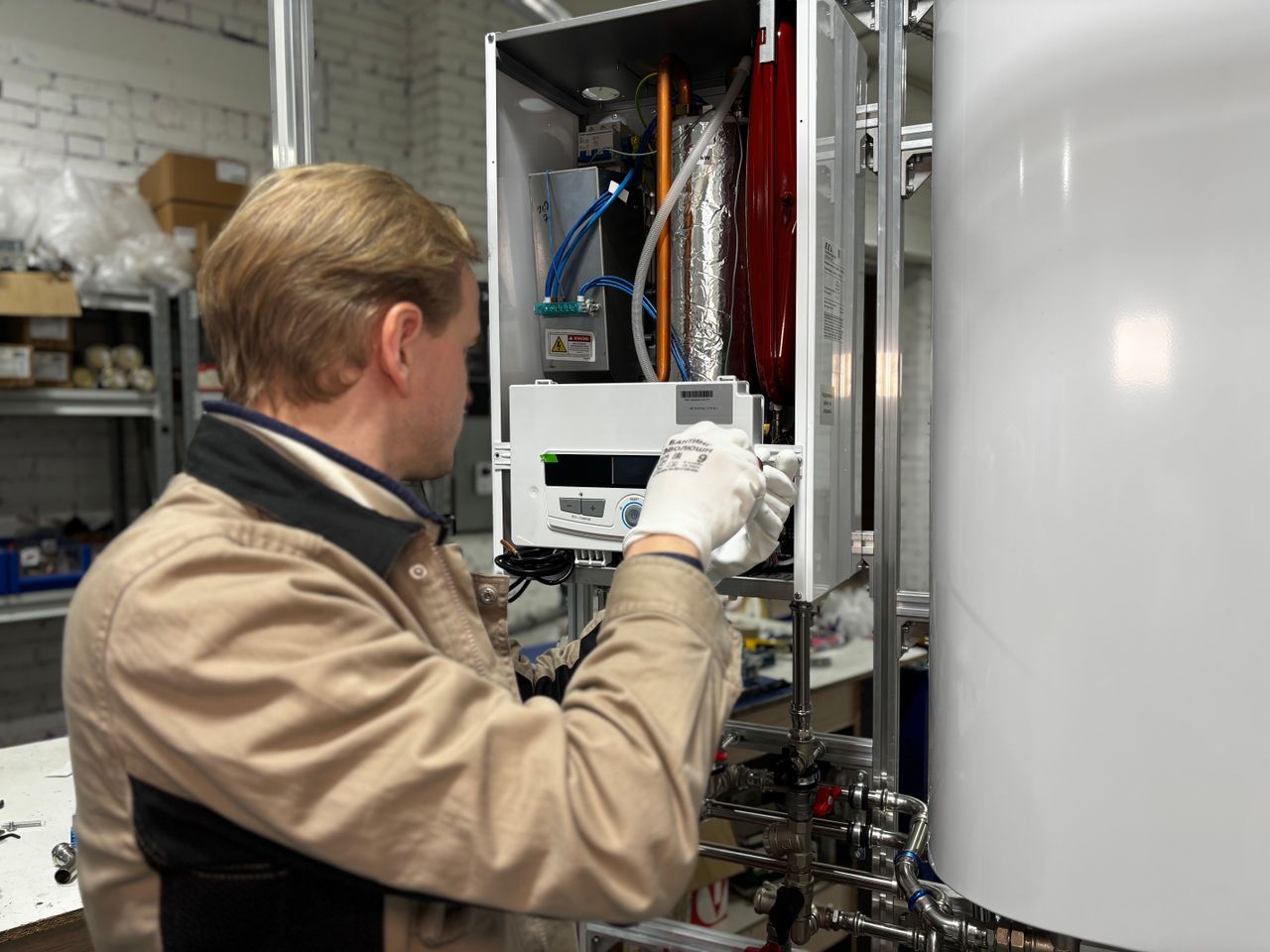
- Tankless Water Heaters: Often called “on-demand” water heaters, these units do not store water. Instead, cold water travels through a high-powered heating element (gas burner or electric coil) only when you turn on a hot water tap, heating the water instantly as it flows through.
2. Endless Hot Water vs. Tank Capacity
- Traditional: Once you empty the tank (e.g., running the dishwasher while taking two back-to-back showers), you have to wait 30 to 60 minutes for the tank to refill and heat up again.
- Tankless: Since water is heated on demand, a tankless unit will supply hot water continuously as long as it’s running. However, tankless units have flow rate limitations (measured in gallons per minute). If three people are showering and running the washing machine simultaneously, the system may struggle to maintain the desired temperature.
3. Energy Efficiency & Utility Bills
- Traditional: Standby heat loss is the main drawback. Because the tank constantly reheats water to maintain temperature 24/7, energy is wasted during times of low usage.
- Tankless: By eliminating standby heat loss, tankless systems operate much more efficiently. According to the U.S. Department of Energy, tankless water heaters can be 24% to 34% more energy-efficient than conventional storage tank units for homes that use 41 gallons or less of hot water daily.
4. Lifespan and Maintenance
| Feature | Traditional Storage Tank | Tankless On-Demand |
| Average Lifespan | 8 – 12 years | 20+ years |
| Maintenance | Annual tank flushing to remove sediment build-up | Annual descaling/flushing to remove mineral buildup |
| Space Required | Requires a large closet, basement, or utility space | Compact design; wall-mounted indoors or outdoors |
5. Upfront Cost vs. Long-Term Value
- Traditional: Lower upfront equipment and installation costs. They are straightforward to replace if you are swapping an old tank for a new one.
- Tankless: Higher initial equipment cost, and installation can require gas line upgrades, specialized venting, or electrical panel updates. However, the higher upfront cost is offset by lower monthly utility bills and a significantly longer lifespan.
The Verdict: Which Should You Choose?
Choose a Traditional Tank Water Heater if:
- You want a lower upfront installation cost.
- You don’t want to modify existing gas lines or electrical setups.
- Your household has standard hot water demands and space isn’t an issue.
Choose a Tankless Water Heater if:
- You want lower monthly utility bills and maximum energy efficiency.
- You want to free up floor space in your garage, basement, or utility room.
- You have a large family or frequently run out of hot water.
- You plan to stay in your home long enough to recoup the investment over its 20-year lifespan.